네 알의 장수사과 Four Jangsu Apples
Shortcut
PrevPrev Article
NextNext Article
Shortcut
PrevPrev Article
NextNext Article
네 알의 장수사과 Four Jangsu Apples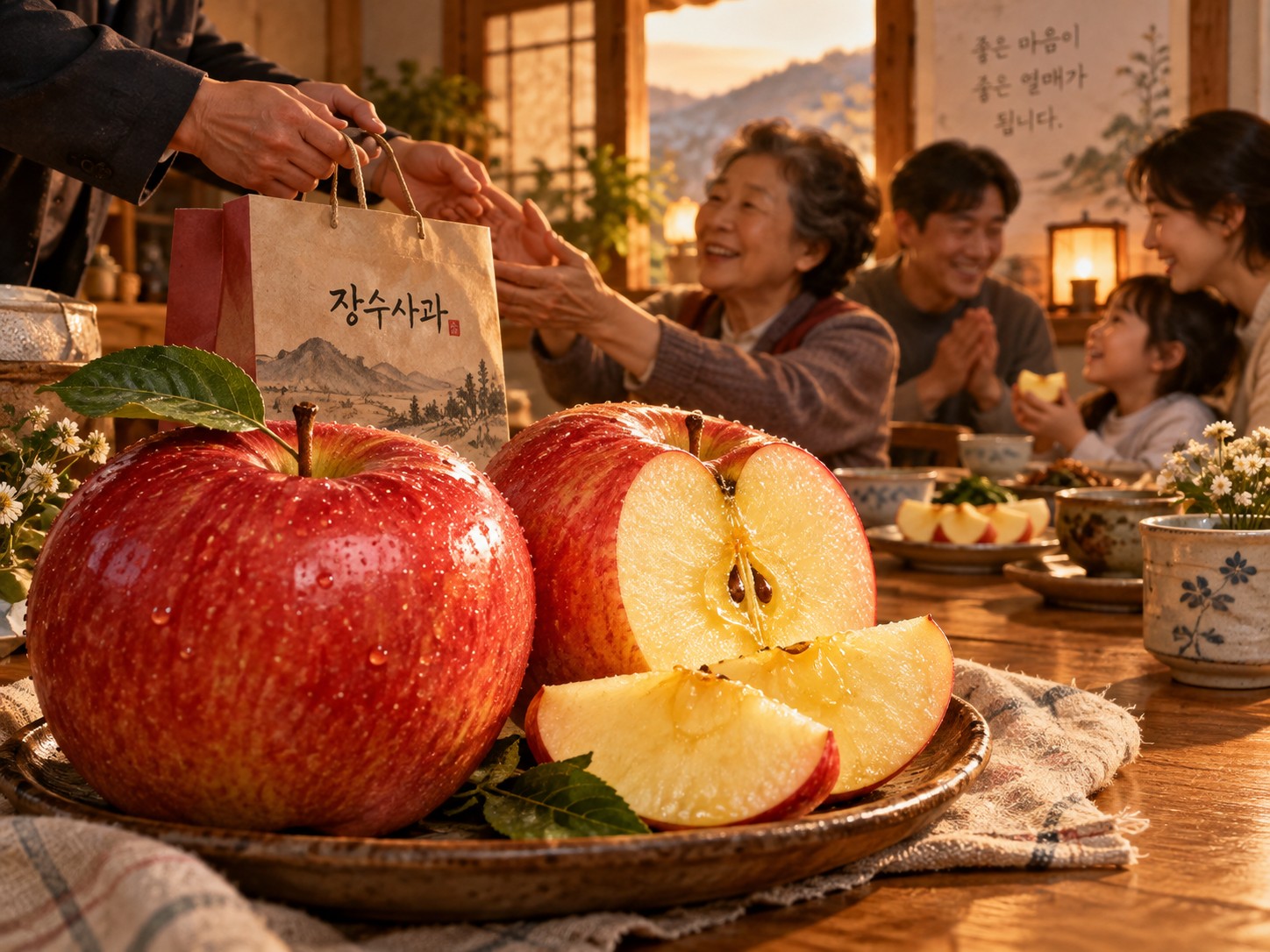
(in Korean then English)
실제로 자주 들어 봤었는지, 라임 때문인지, “장수사과”라는 말이 귀에 익었다. 하지만 먹어 본 것이 처음인 것은 분명하다. 사실 한국에 살 때 그렇게 좋은 사과를 먹어 본 기억이 없다.
중학교 동창들을 만나는 자리를 파하고 한 친구가 종이 가방을 건네주었다. 갓난아기 머리통만 한 사과 네 알이 들어 있었다. 장수 조합장님이 순창까지 선물로 가져와 주신 것 중 네 개라고 했다.
한국 여행 동안 머물고 있던 처형 집으로 가져갔다. 다음 날 아침 처형은 사과가 보통 사과가 아니라고 하셨다. 한국은 사과가 비싸다면서 그렇게 좋은 사과는 먹어 보기 힘들다고 하셨다.
처형님이 사과를 씻어 잘라 내놓았는데 속에 꿀이 박혀 있었다. 한 입 베어 무니 신선한 풍미와 아삭한 식감, 그리고 단맛이 입안을 가득 채웠다. 미국에서 흔히 먹던 후지 사과와는 맛이 달랐다.
이야기의 시작
미국에 돌아온 지 5일째 되는 오늘, 새벽 일찍 깬 입안이 껄끄러웠다. 문득 그때 먹은 사과 맛이 생각났다. 동시에 머릿속에 이 글의 아이디어가 떠올랐다. 바로 ‘전해짐’에 대한 것이었다.
장수 조합장님은 첫 수확 중 좋은 사과를 소중한 분들에게 선물했다. 내 친구도 그 수혜자의 한 명이었다. 내 친구는 모처럼 미국에서 나온 나에게 그 사과를 맛보여 주고 싶었을 게다. 그리고 나는 한국에 나온 아내와 나를 거두어 주시는 처형님과 동서에게 드리고 싶었다.
그 사과를 먹은 모든 사람이 그 사과의 맛을 칭송하고, 그것을 전해 준 사람들에게 감사했다.
사과 네 알이 이렇게 아름다운 이야깃거리가 되게 한 두 가지 사실이 있다. 하나는 사과가 좋고 맛있었기 때문이고, 다른 하나는 그 사과가 사람들을 통해 전해졌기 때문이다.
사과를 잘랐는데 속이 썩었거나 텅 비어 있었다면 이야기는 달라졌을 것이다. 조합장님과 친구가 선물하지 않았어도 또한 이야기는 생기지 않았을 것이다.
좋은 사과가 있었고, 그것이 사람들의 마음을 타고 전해진 사실이 아름다운 이야기가 되었다.
장수사과 선물의 교훈
복음도 마찬가지인 것 같다. 좋고 맛있는 것이 있어야 하고, 또 그것이 전해져야 아름다운 생명의 이야기가 된다.
복음이라는 이름만 붙어 있으면 다 같은 복음이고, 좋은 마음으로 전하기만 하면 된다고 가볍게 생각하지 말자. 외형은 복음이지만 속은 썩거나 텅 빈, 복음 아닌 ‘복음’들이 넘치는 현실을 외면한다고 없는 일이 되지는 않기 때문이다.
만일 지금까지 좋은 마음으로 서로에게 전한 복음이 정말 순전하고 생명력 있는 복음이었다면, 오늘날 교회와 교인들에게 나타나는 외형과 내면의 부조화가 이렇게까지 심했을까?
물론 바른 복음을 들었다고 해서 모든 사람이 바르게 사는 것은 아니다. 인간의 불순종도 있기 때문이다. 그러나 지금 교회와 교인들에게 나타나는 외형과 내면의 부조화는 적어도 우리가 어떤 복음을 전하고 받아들여 왔는지를 진지하게 돌아보게 한다.
썩거나 바람 든 사과가 좋은 이야기를 만들 수 없는 것과 같다.
작년에 한국으로 돌아갈 마음을 처음 먹었을 때는 정말 막연했다.
‘한국에 가서 내가 할 사역이 있을까? 한국 사람들에게 내가 무슨 영적인 도움을 줄 수 있을까?’ 하는 생각이 들었기 때문이다.
그런데 이번에 한국에 다녀와서 조금 분명해졌다. 그것을 깨닫는 데 장수사과도 한몫했다.
사람의 욕망과 생각을 섞지 않은 순전한 복음, 성경이 말하는 그대로의 복음을 사랑의 마음으로 전하는 것. 그리고 그 복음이 사람의 마음을 타고 또 다른 사람에게 전해지는 아름다운 이야기를 만들어 가는 것.
어쩌면 그것이 내가 해야 할 일인지도 모르겠다.
“우리는 수다한 사람과 같이 하나님의 말씀을 혼잡하게 하지 아니하고 곧 순전함으로 하나님께 받은 것 같이 하나님 앞에서와 그리스도 안에서 말하노라” 고린도후서 2장 17절.
I am not sure whether I had actually heard the phrase many times before, or whether it simply sounded familiar because of the way the words roll off the tongue, but “Jangsu apples” had always sounded strangely familiar to me. One thing is certain, though: this was the first time I had ever tasted one. In fact, I do not remember ever eating apples this good when I lived in Korea.
After a gathering with my middle school classmates, one of my friends handed me a paper bag. Inside were four apples, each about the size of a newborn baby’s head. He told me that the head of an agricultural cooperative in Jangsu had brought them all the way to Sunchang as gifts, and these four were part of what he had received.
I took them back to my sister-in-law’s house, where my wife and I were staying during our trip to Korea. The next morning, she looked at the apples and said they were no ordinary apples. Apples are expensive in Korea, she said, and it is not easy to come across ones of that quality.
She washed one, cut it open, and set it on the table. The flesh was filled with translucent, honey-like sweetness. When I took a bite, the fresh aroma, crisp texture, and sweetness filled my mouth. It tasted very different from the Fuji apples I commonly eat in America.
The Beginning of a Story
Today, five days after returning to America, I woke up early in the morning with a dry, unpleasant taste in my mouth. Suddenly, I remembered the taste of that apple. At the same time, an idea for this piece came to me. It was about being passed on.
The head of the Jangsu cooperative had selected good apples from the first harvest and given them to people he valued. My friend was one of those who received them. He probably wanted me, having come all the way from America, to taste one of those special apples.
And I, in turn, wanted to share them with my sister-in-law and brother-in-law, who had welcomed my wife and me and cared for us during our stay in Korea.
Everyone who tasted the apples praised how good they were and felt grateful to the person who had passed them along.
Two things made those four apples into such a beautiful story.
First, the apples themselves were good and delicious. Second, they were passed from one person to another.
If we had cut one open and found it rotten or hollow inside, the story would have been very different. And if the cooperative head and my friend had never shared them, there would have been no story at all.
There were good apples, and they traveled from heart to heart.
That is what made the story beautiful.
The Lesson of the Jangsu Apples
I think the gospel is much the same.
There must first be something truly good and life-giving, and then it must be passed on. Only then does a beautiful story of life begin.
We should not assume that simply because something is called “the gospel,” it must therefore be the same gospel, and that all that matters is having a good intention to share it.
We cannot make the reality disappear by ignoring it: there are many “gospels” that look like the gospel on the outside but are rotten or hollow within.
If the gospel we have sincerely passed from person to person had always been pure and truly life-giving, would there be such a deep contradiction today between the outward appearance of churches and Christians and what is found within?
Of course, hearing the true gospel does not automatically mean that everyone will live rightly. Human disobedience is also real.
Still, the gap we see today between outward appearance and inward reality in churches and believers should at least cause us to examine seriously what kind of gospel we have been preaching and receiving.
A rotten or hollow apple cannot create a beautiful story.
When I first began thinking last year about returning to Korea, everything felt very vague.
“Would there really be any ministry for me to do in Korea?”
“What kind of spiritual help could I possibly offer Korean people?”
Those questions stayed with me.
But after this recent trip to Korea, something became clearer.
And, in its own small way, the Jangsu apple helped me see it.
To share a pure gospel—one not mixed with human desires or human ideas. To share, with love, the gospel as Scripture itself gives it to us.
And then to help create a beautiful story in which that gospel travels from one heart to another.
Perhaps that is what I am called to do.
“For we are not, like so many, peddlers of God’s word, but as men of sincerity, as commissioned by God, in the sight of God we speak in Christ” 2 Corinthians 2:17.
 부르심의 의미 A Meaning of God's Calling (in Korean and Engl...
- Read More
- Read More
-
Read MoreNo Image
The Invitation and the Funeral: Understanding Spirit Manifestations and Baptism
- Read More
- Read More
-
Read More

For Those Suffering From Their Being 존재로 인해 환란받는 이들에게 (English and Korean)
- Read More
- Read More
- Read More
- Read More
- Read More
- Read More
- Read More
- Read More
- Read More
- Read More
- Read More
- Read More


